
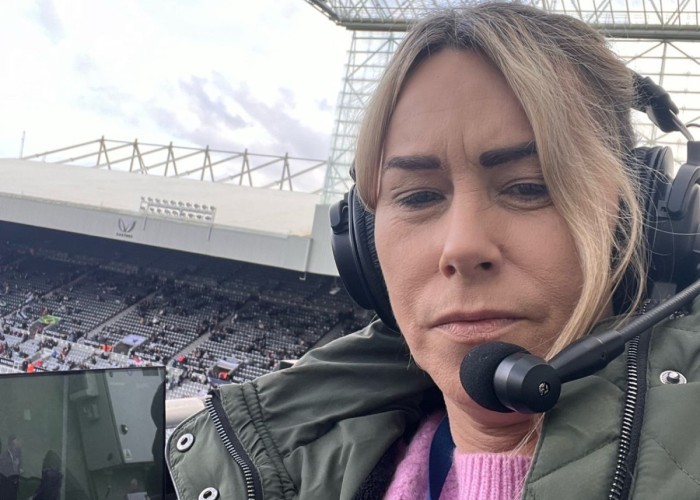
Aran Embleton is a former England international footballer, coach, commentator and advocate for the women’s game. Her career began when opportunities for girls were limited and women’s football received little money or media attention. Through talent, courage and hard work, she reached the highest level, played in an FA Women’s Cup final and earned four senior England caps.
Who Is Aran Embleton?
Aran Helen Nevins Embleton was born on 7 October 1981. She is 44 years old in 2026 and has strong roots in Northumberland, especially Dudley and Cramlington. She grew up supporting Newcastle United and spent much of her childhood playing football with boys.
Childhood and School Years
At primary school, she was often the only girl in the football team. She had the speed, control and confidence to compete with boys, yet the rules of the period made her path difficult. Mixed football was restricted after children reached a certain age. She could no longer remain with the boys’ side, even though her ability was clear. A school caretaker named Ken Best helped her find an organised women’s team and continue playing. She attended Seaton Burn High School and later studied at Loughborough College.
Aran Embleton’s Early Football Career
Aran Embleton joined Cowgate Kestrels when she was about ten or eleven. During one of her first senior women’s appearances, she came on as a substitute and scored three goals. Her pace earned her the nickname “Speedweed”, while teammates also called her “Azza”. By 14, she had moved into the first team. The club pathway later became linked with Blyth Spartans and Sunderland as women’s football structures changed across the region.
A Major Move to Doncaster Belles
During the 1999–2000 season, she joined Doncaster Belles as a teenager. Doncaster were one of England’s leading women’s clubs and had a proud domestic record. She helped Doncaster defeat Arsenal in the FA Women’s Cup semi-final, sending the Belles into the final at Bramall Lane on 1 May 2000.
The 2000 FA Women’s Cup Final
Doncaster faced Croydon in the final and lost 2–1. Embleton started the match wearing number three. Although mainly a midfielder, winger or forward, her versatility allowed her to perform in different roles. She also took part in the 2001 Women’s Charity Shield against Arsenal. In October 2000, she scored twice as Doncaster defeated Sunderland 4–0. Her club form soon led to an England opportunity.
Aran Embleton and the England Team
Her first involvement with the national set-up came at a young age. At about 14, she was invited to a senior England training week at Bisham Abbey after impressing at a tournament in Ponteland. She later represented England at youth level before joining the senior side.
Four Senior England Caps
Her senior debut came against Spain at Kenilworth Road in Luton on 22 March 2001. England won 4–2. She earned four senior caps between March 2001 and January 2002. Her opponents were Spain, Denmark, Portugal and Sweden.
Her match against Portugal on 24 November 2001 was part of World Cup qualification. Her final senior appearance came against Sweden on 25 January 2002. She did not score for the senior team, but reaching international level was a major achievement during a demanding period for female players.
England Legacy Number 137
The Football Association later introduced legacy numbers to honour every woman who had represented the senior national team. Embleton received Legacy Number 137. Alex Greenwood presented her ceremonial cap at St George’s Park on 4 April 2023. The honour recognised her place in Lionesses history before professional contracts and regular television coverage became common.
Return to North East Football
Aran Embleton returned to Sunderland in December 2001 and later played for Chester-le-Street Ladies. She shared a squad with Rachel Furness, who later represented Northern Ireland. After a break, she joined Whitley Bay Ladies in 2005. A local account credits her with 46 goals during the 2005–06 season, showing that she remained a dangerous attacking player.
Her later career included time with Cramlington Juniors, North Shields Ladies and New Fordley. Full club appearance and goal totals are unavailable because many records from that period were not preserved.
Playing Style and Main Strengths
Aran Embleton was known for pace, close control and direct dribbling. She could play through midfield, on the wing or as a forward.
Technical Ability
Her strongest qualities included quick changes of direction, intelligent movement and the confidence to challenge defenders. She used balance and skill to compete against stronger opponents. She relied on sharp thinking, timing and technique to create chances, score goals and adapt to several positions.
Coaching and Grassroots Development
After ending her playing career, she remained closely involved with football. She became a UEFA C-qualified coach and founded Aran Embleton Coaching. Her sessions focus on ball control, dribbling, movement, decision-making and confidence. She works with young players who need personal guidance and a safe place in which to improve.
Whickham Fellside Ladies
In 2025, she became head coach of the newly formed Whickham Fellside Youth FC ladies team for the 2025–26 season. The role allowed her to bring international experience into community football. She has also supported Consett Warriors Youth Football and worked in a regional role connected with TeamFeePay, a platform serving grassroots clubs.
Commentary and Public Speaking
Aran Embleton has worked as a commentator for Newcastle United Women. She has contributed to live club broadcasts and discussions about the team. She has also joined radio programmes, podcasts and public events, often describing how earlier female players paid fees, raised funds and trained on basic pitches. Her experiences give modern fans a clearer picture of how difficult women’s football could be before major clubs and broadcasters began investing in it.
Supporting Inclusion and Football Heritage
Aran Embleton has worked with former Lioness Christine Knox to honour women who helped build football in the North East. In 2025, they took part in an event remembering Mary Lyons, an early female footballer whose achievements had received little recognition for many years.
Embleton has also spoken about equality and inclusion. As a queer woman in football, she supports a game where women, girls and LGBTQ+ players can take part without fear or prejudice. Her message centres on respect, opportunity and fair treatment. She believes football should provide a welcoming environment for every player, regardless of gender or identity.
Aran Embleton’s Wife and Family
Lianne Embleton is her wife. Lianne is connected with The Floral Décor Company, a business working in venue styling and event decoration. The couple have attended community and football events together. No dependable source confirms whether they have children, and their wider family life remains private. Embleton has shared parts of her professional journey openly, but she keeps many personal matters away from wider attention. This balance allows her football work to remain the main focus.
Net Worth and Unconfirmed Details
No verified figure exists for her net worth, salary or coaching income. Her height, total career earnings and complete club statistics have also not been confirmed. Her England caps, cup-final appearance and coaching work offer a clearer measure of her achievements.
Why Her Career Matters
Women from Embleton’s generation often had to pay to play, travel long distances and train in basic conditions. They did not enjoy the large crowds, strong facilities or commercial support available to leading players today. Despite these barriers, she reached the England senior team. Her success proved that talented players could emerge from the North East even when the pathway was difficult. Her move into coaching has also strengthened her influence. Young footballers can now learn directly from someone who competed at domestic and international level.
Aran Embleton’s Lasting Legacy
Aran Embleton reached international football when women faced major barriers at every stage of the game. She played in an FA Women’s Cup final, represented England four times and received Legacy Number 137. After retirement, she continued helping the sport through coaching, commentary, speaking and community work.
Her career connects two different periods in women’s football. She began when girls had few teams and poor facilities, and she now helps younger players enter a stronger game. Her story reflects talent, persistence and service. She remains an important figure in North East football and a valued member of Lionesses history.
